
A conversation can go well and still leave you guessing. Interested? Busy? Keeping options open? In 2026, the desire for dating hasn't faded; what's changed is how much patience people have for not knowing.
People are tired of profiles that feel too polished, conversations that go nowhere, and putting in effort for connections that never really turn into anything.
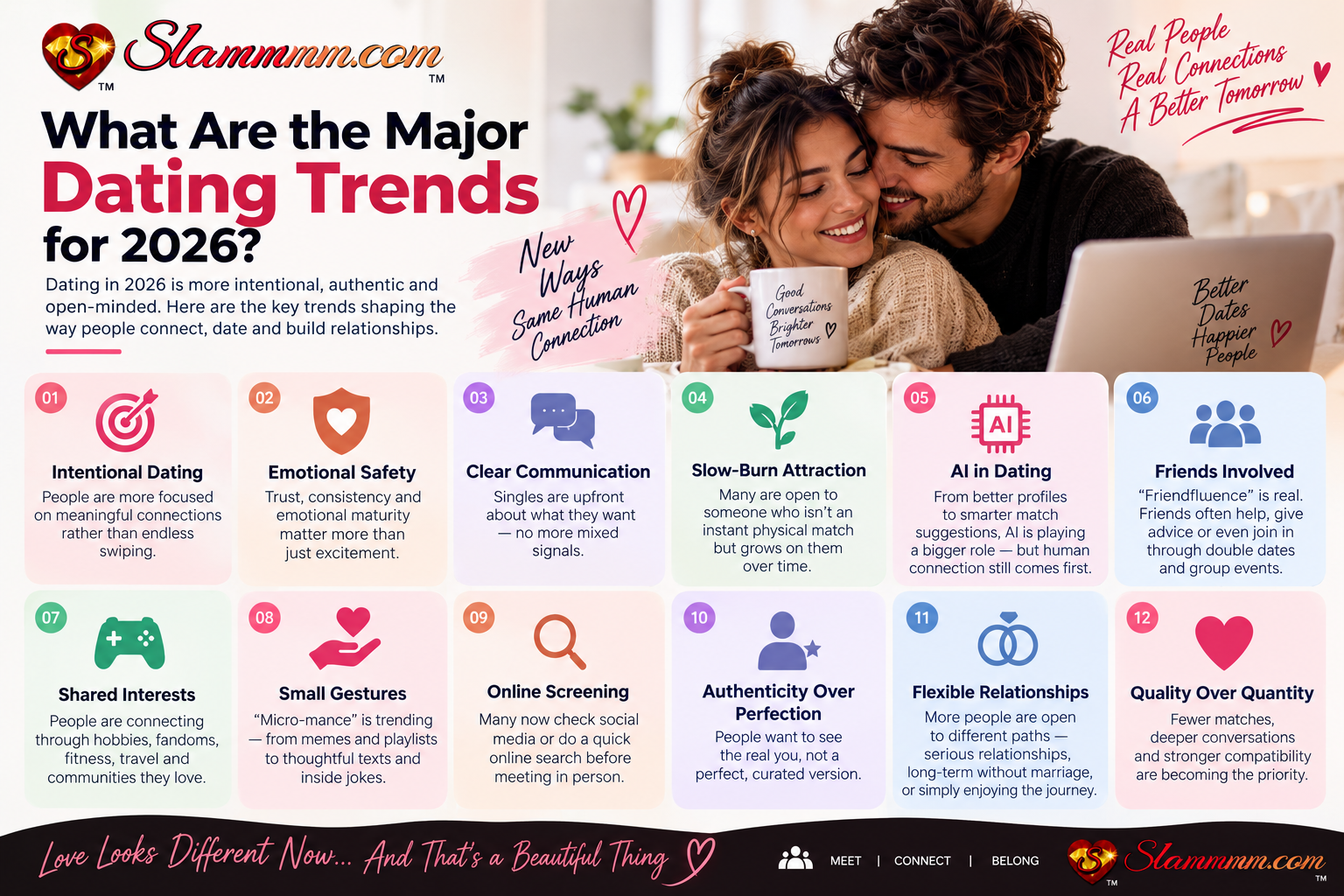
So the search now is for honesty upfront and clarity sooner. Dating culture is now becoming more grounded and direct. Here's a quick look at the relationship news updates in 2026 that are actually driving it:
- IRL over apps
- Slow dating
- People are getting more intentional about commitments.
- Yearner energy (radical honesty)
- Friendfluence
- Authenticity vs. AI
- The "dating recession" reality check
- AI companions and dating fatigue
What Is Going on With Dating in 2026?
People still want relationships. But what's different from previous dating patterns is that people are becoming more selective about how they spend their time getting there.
When every match turns into another dead-end chat, dating starts to feel less like meeting people and more like a second job. Match's Singles in America survey found that intentions around dating have gotten clearer over time; now over half of singles say unclear intentions are the number one reason dating feels exhausting.
Translation: it's not that people hate dating; they hate not knowing where they stand. Behind these shifts is an interesting story, too. But the numbers aren't the whole picture.
What matters is what they reveal about dating behavior: people want to know what someone actually wants, if the interest is mutual, and if there's enough of a spark to keep exploring the connection. It's not about who's available. It's about who's actually right for you.
Swiping Less, Meeting More: The Return to IRL Dating
You have exchanged jokes, asked about each other's weekend, and spent the last three days building momentum, only for it to end. Then, when someone finally suggests meeting, the conversation quietly dies.
That cycle of matching, chatting, and never meeting up is exactly why burnout hits so fast. Too many options and too many vague conversations just get in the way of actually connecting.
That's the problem current relationship advice trends in 2026 keep circling back to: less time behind a screen, more time actually meeting in person.
Online messaging can create the feeling of connection without proving that two people actually click in person. So people are now swapping screen time for run clubs, casual dinner parties, and bookshop mingles.
These setups work because they remove the performance aspect of traditional online profiles. You get to see how someone moves, laughs, and interacts with others in real time, cutting straight through the guesswork.
Slow Is the New Fast: Dating Without the Rush
A great first spark can make someone seem like a perfect match, until everyday differences start showing up.
Maybe the conversation is effortless, but one person wants constant communication while the other disappears for two days. Maybe the chemistry is strong, but their expectations for commitment are completely different.
That's why slowing things down can reveal what chemistry alone can't. Slow dating shifts the focus from quick attraction to taking your time. It gives you a chance to see how someone communicates once the first excitement wears off.
What Is the 3-6-9 Rule for Dating?
The 3-6-9 rule is basically a simple way to check in with yourself as things move along:
- 3 Dates: Evaluating mutual interest and baseline comfort, if the conversations flow naturally without pressure.
- 6 Weeks: Observing behavioral consistency over a sustained period.
- 9 Weeks: Assessing long-term compatibility, including schedule alignment, communication styles, and shared expectations.
Rather than moving quickly based on early chemistry alone, it's less about the spark and more about what happens after it fades.
Situationships Are Out. Commitment Is Back
“So, what are we?”
This question used to feel like a relationship milestone. Now, it can feel like a basic request for clarity.
Dating in 2026 is seeing a stronger push toward knowing what a connection is actually becoming. The problem isn't always a lack of interest. Sometimes it's the frustration of trying to interpret mixed signals.
People say they're not looking for something casual anymore. They want it to lead somewhere real. And that's what SLAMMMM is built for people who don't just want another match; they want to Meet. Mingle. Marry.
However, wanting a commitment and being ready for one are two very different things. SLAMMMM has noticed a consistent pattern where users usually don't lose interest in a match; they lose patience with not knowing if the interest is mutual.
Instead of guessing if someone's investment matches their words, SLAMMMM's Love Diamond provides clear visual feedback on changing interest levels, so you don't have to read into quiet shifts or sudden silence.
Yearner Energy Is In: Why Honesty Is Having a Moment
You like someone. You want to see them again. So why pretend you don't care?
The old strategy of waiting three hours to reply or acting less interested than you really are is losing its appeal.
People would rather just say what they want instead of pretending not to care, and that's brought a whole new set of dating terms with it.
What Are the New Dating Terms for 2026?
Modern dating language focuses on transparency, pacing, and realistic expectations. Key terms defining this shift are:
- Yearner Energy: Not playing hard to get anymore. If you like someone, you just say it.
- Soft Launching: Letting your friends catch a glimpse of your situationship before you make it Instagram-official.
- Micro-mancing: Skipping the grand gestures. A "good morning" text every day hits different than flowers once a year.
- Wildflowering: Zero timelines, zero pressure. Just letting things grow at their own pace and seeing where it goes.
Friendfluence: Friends Vet Your Dates
You match with someone who seems great on paper, but before you confirm Friday night plans, the screenshot goes straight to the group chat.
That quick screenshot has become part of the dating process. Singles are leaning heavily on "friendfluence" to avoid wasted time and bad patterns.
In group dates, friend-approval checks, or the group chat acting as a hype crew, bringing your friends into the picture keeps you honest with yourself. It gives you a reality check from people who actually know you best, well before a second date happens.
Real Beats Perfect: The New Dating Profile
Your profile looks great. Your photos are polished, your bio sounds thoughtful, and your opening line is perfectly timed. Then you meet in person and realize you've been talking to the best-written version of someone, not necessarily the real one.
When AI can write the perfect bio, touch up every photo, and script flawless opening lines, it gets much harder to figure out who's actually on the other side of the screen.
All those overly polished profiles and computer-generated openers have left people feeling skeptical about what they see online. The better AI gets at faking connection, the more people crave the real thing.
That's the whole idea behind SLAMMMM: less performing, more connecting. Because you can't Mingle your way to Marry on a fake profile. According to SLAMMMM's relationship research team, profiles with specific, real details consistently get more genuine engagement than heavily polished ones.
Its Interests feature gives you a direct, honest look at someone's real daily life and passions, so you get a genuine read on their personality instead of just scrolling through a staged highlight reel.
The "Dating Recession": What the Stats Really Show
A first date can mean dinner, drinks, travel, and a bill, all for a connection that may go nowhere. After a few dates like that, spending money on another one can start to feel like a risk.
The latest stats on relationships from the Institute for Family Studies highlight a clear shift: only around 30% of young adults are actively dating right now.
That doesn't mean people have stopped wanting a partner. It suggests that dating can feel expensive, tiring, and harder to navigate than it needs to be.
Rising costs can make even a casual drink feel like a big expense, while repeated conversations that go nowhere can make singles less willing to keep trying.
Instead of downloading another app and starting the same cycle again, it can help to make meeting someone simpler. Low-cost, low-pressure plans like a quick coffee, a walk, or a local run club can take some of the pressure off a first meeting.
That's also where SLAMMMM fits. It offers a lower-cost, low-pressure way to gauge mutual interest so that you will not end up spending time and money on an expensive date.
Where Love Happens in 2026
Your next relationship might start in a dating app. Or at your friend's birthday party. Or because you joined a Sunday run and kept talking to the person beside you afterward.
What really matters is how things continue after that first meeting and if you actually enjoy spending time together.
- Mutual Friends & Social Networks: Introduced through shared circles, house parties, or group chats.
- Niche Apps & Match Platforms: Built around intentional, targeted filtering rather than blind swiping.
- IRL Events & Interest Groups: Connected over shared hobbies like run clubs, pottery classes, or book clubs.
- Workplace & Professional Settings: Formed naturally over shared routines and frequent daily interaction.
Today's dating landscape isn't simply an "apps versus real life" choice. A digital conversation can open the door, while meeting in person can reveal things a profile never could.
AI Companions and Dating App Fatigue
Dating burnout goes beyond messaging someone for a week only for them to ghost. A new layer has entered the mix: AI companions can now offer instant, perfectly tailored responses that require zero emotional risk.
When AI writes messages, edits photos, and offers risk-free conversations, it's getting harder to tell what's genuine and what's not.
Technology should cut down the awkward guesswork of finding someone, not try to replace the human being on the other side. So SLAMMMM keeps it simple; it focuses on helping you signal interest clearly.
So What Does All This Mean for Your Dating Life?
Dating with intention in 2026 comes down to three things: protecting your time, keeping your expectations clear, and skipping the guessing games. When you stop treating online dating like an endless scroll, the entire experience becomes very straightforward.
Here is how to put that into practice:
- Stop collecting matches. Start testing compatibility. Five conversations at once can feel productive, but they rarely tell you much about any one person. Give promising connections enough attention to see where they actually go.
- Say what you want earlier. You don't need to ask someone about marriage in the first message. But you can be honest about whether you're looking for something casual, serious, or simply open to seeing where it goes.
- Don't let messaging become the relationship. If you've been talking for days but haven't moved toward a call or meeting, you're learning less than you think.
- Pay attention to patterns, not promises. Someone can say they're interested. Consistently showing up tells you more.
Frequently Asked Questions
Q1. What is the 3-6-9 rule for dating?
The 3-6-9 rule suggests checking in on a connection at three, six, and nine weeks to gauge interest and compatibility. It's a simple way to avoid staying too long in a situation that isn't going anywhere.
Q2. What are the new dating terms for 2026?
Terms like "yearner energy," "friendfluence," and "slow dating" describe how people are approaching connections with more honesty and less rush. These phrases capture a shift toward clearer intentions and fewer mixed signals.
Q3. How do most couples meet in 2026?
Couples are meeting through a mix of dating apps, shared social circles, and in-person settings like events or hobby groups. Apps remain common, but interest in meeting organically has grown alongside app fatigue.
Q4. Are people dating less in 2026?
Not necessarily less, but differently. The relationship statistics show people are being more selective about who they invest time in, prioritizing connections that show real potential over casual matches that lead nowhere.
Q5. What is going on with dating in 2026?
Dating in 2026 is shifting toward honesty, intention, and efficiency. People want clarity sooner, fewer drawn-out conversations, and connections that translate into real meetups rather than endless app-hopping.